We’ve seen an increase in AI-generated content being shared in the community, so we’ve updated our Community Guidelines to promote transparency and meaningful discussion.
When posting content generated or substantially assisted by AI, please disclose it. Instead of sharing lengthy AI-generated or copied responses, consider linking to the original source and providing a brief, high-level summary in your own words.
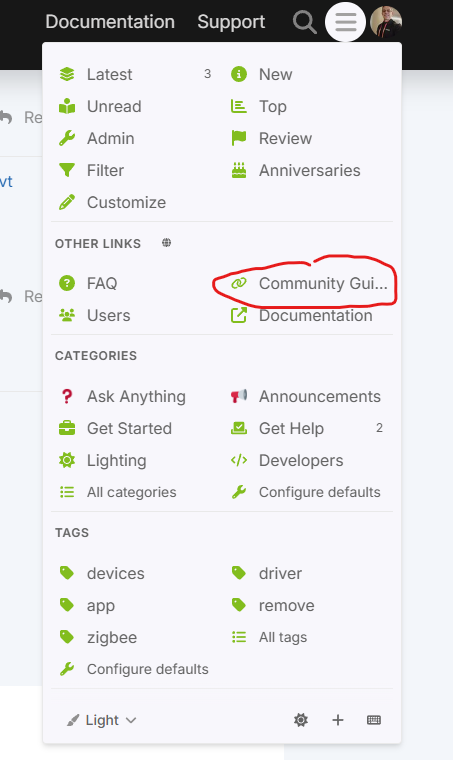
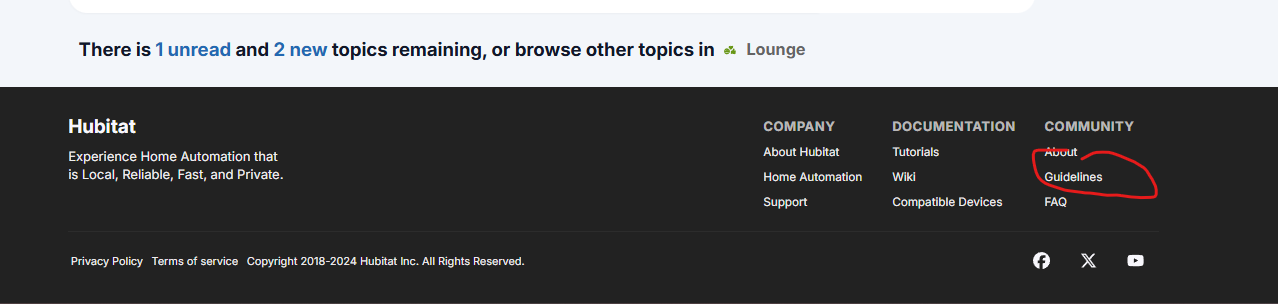
Thanks for this post, I've never read the guidelines, as there does not seem to be a clear link to them anywhere. I was searching for them before you posted this and I could not find them. However, AI brought me right to the guideline page
Shouldn't guidelines be more prominently linked somewhere?
I have to say that there has been an EXPLOSION of new, functional, programs on this group, which I attribute to the wide spread use of AI (or AI assisted).
I give credit to Bruce Ravenel for deciding at the very beginning that parts of Hubitat were to be "closed" and that it would be relatively easy to "add onto" Hubitat. That was a very prescient approach, which has really helped Hubitat in many ways.
For myself, I've decided to start using a new type of dashboard that has just recently been developed. There are loads of new and interesting software that has just been released. I assume that AI has had a lot to do with that.
But AI can also regurgitate nonsense. And, as @marktheknife pointed out, posting that here creates iterative cycles of disinformation that spread misinformation. So, Hubitat's request is for community users to critically evaluate AI-generated information before posting it here.
Yes, please. This is a very simple, reasonable ask, don't post stuff unless you've had some basic eyes-on confirmation/personal use, or unless you're posting to ask others to help you confirm if the content is accurate/useful or not. It's like my wife's rule of thumb, don't believe anything I say unless she's verified it personally.
Just out of curiosity (and maybe a little bit of playing devil's advocate)...... can AI figure out when someone is asking for verification vs when they are parroting another AI output? The point of the question is: if they paste the output from AI that is clearly (or even not so clearly) hallucinating as a question for confirmation, what stops future AI from including that in the same circular logic?
Very true, AI is leading to lots of new apps in the community, and AI is especially good for writing drivers for new devices. I always mention when code I post is 100% AI generated, or if it was used as a helper to write an app or driver.
Code generation is so much different than answering questions, though. AI will always hallucinate. Take it from me, I posted some AI slop this week without really reading it over, and I believe the discussion around that is why this thread was posted.
AI even hallucinates when writing code for Hubitat, in that it will make up methods that do not exist, or capabilities that do not exist. It seems to be getting better, though.
I wish AI would stop being so confident in it's answers, and it would be nice if it could give us a probability of how correct it thinks it is. I'm not sure that is possible with LLMs though, it strung together the words it thought were correct at the time, so I'm not sure it can evaluate its own correctness in real time. However, if you have it recheck it's answer by just saying that you question if it is true, it can find mistakes in the answer it just gave you.
I've run into this with HE dashboard CSS using Gemini. It seems to just guess at things until it finally stumbles on the right method but, reading the "why this is going to work" each time it comes across as 100% certain. Lately, Grok has been better than Gemini for me but it often won't help us peasants using free access during the day when it's busy, understandably so.