Need advice on a relatively simple Smart thermostat question - gas fireplace

Hello everyone,

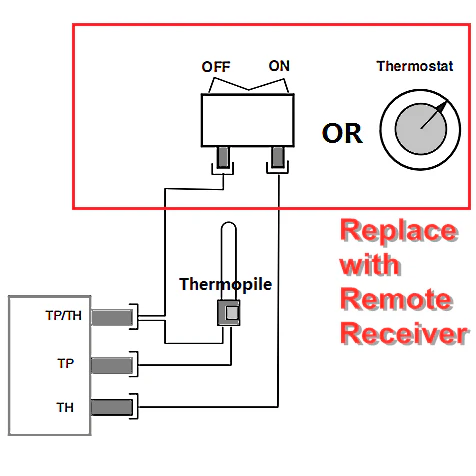
I have been trying to make my simple on / off switch that controls my natural gas fireplace smart for over a year now and have tried so much troubleshooting that I need to ask for some general advice. As background, my gas fireplace wiring looks like this:
image

The on / off switch opens and closes the circuit that I assume opens a valve to allow the flow of natural gas that is ignited by the pilot. I don't see any Transformer under my fireplace, so I presume it is getting millivolt power from the pilot (which I think is the thermopile).

There is no power to the switch.

This is what I have tried:

  1. I acquired a Zen zigbee thermostat since it appeared to fit the bill, it paired fine, worked for a few hours, the dropped off the zigbee network.
  2. I acquired a 24 volt transformer to keep power running to the thermostat, it still dropped off the network. At this point I presumed the Zen was defective (purchased on eBay...so no returns).
  3. Returned the 24V power supply
  4. Acquired a zigbee Centralite Pearl as it can also run on batteries, pairs fine and still drops off the network after a few hours.
  5. At this point I am thinking my Zigbee network might be the issue (my C7 hub is on a different floor and I have 3 repeaters around the house).
  6. Setup Home Assistant Container on my NAS, purchased a new Zigbee coordinator dongle (use a channel far away from my C7 zigbee network) and pair the Centralite. It drops off after a few hours.
  7. I try to reinstall the Zen, it also drops off after a few hours
  8. I repurchase the 24V power supply and try both the Zen and the Centralite on the HA network, they pair fine, then drop off after a few hours.

Not sure what to try next...on the HA forum someone suggested that my zigbee network is weak with only 5-6 devices, I don't see any of my other devices dropping off (temp sensors, outlets, roller shades), but maybe thermostats behave differently? How many zigbee devices are needed for a "strong" network?

I still have the 24V power so I technically have what is needed to run power to the thermostat (a C wire), but I am loathed to try another zigbee thermostat (like a Sinope) as I will not be able to return it once the box has been opened.

Should I give up on a zigbee Thermostat and go with a Z-wave device? Perhaps the Honeywell?

Should I just go wifi with something like an Ecobee?

I know I can do something like a Shelly relay and a temp sensor and "make" a thermostat, but I really want the ability to interact with a physical device AND control it with authomation rules.

Any help would be appreciated!
A few things might be relevant,

  1. Be careful about controlling a (potentially unattended) gas appliance via a hub and various rules. There should be a lot of attention on fail safe modes such that if the hub and/or control device stop working (for any reason) nothing dangerous to the house can occur.
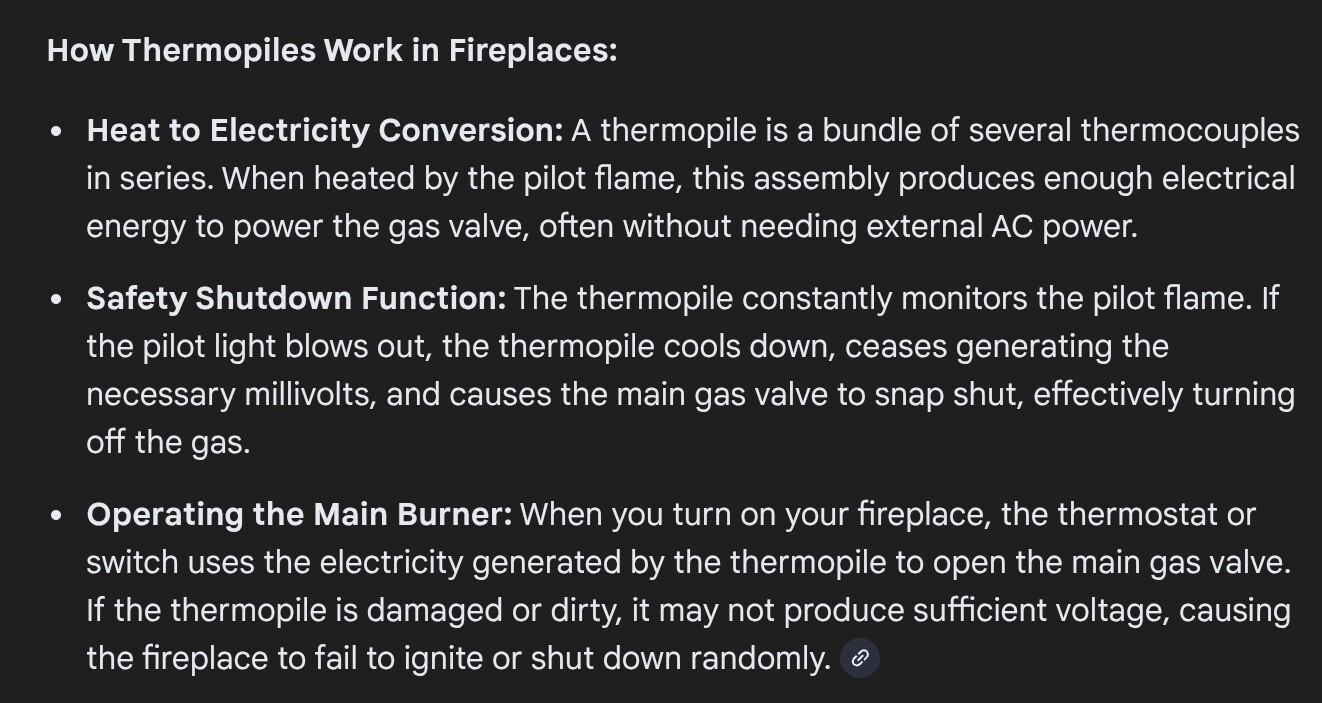
  2. A thermopile is a 500mV voltage source. That is very small and any switching of that path to the gas valve must be with low resistance dry contracts to eliminate any voltage drop. A 24VAC thermostat will not work to control a 500mV gas valve if it isn't designed to switch a thermopile circuit.
  3. You could possibly use a 24VAC thermostat and transformer to control a 24VAC relay and use the NO and C contacts to break the line from the thermopile to the gas valve.
  4. You might want to add a high temp limit switch in series with the thermopile to kill the gas if the fireplace gets too hot. This could be one element of a multi-element fail safe strategy.

Be careful, its not the nominal case that gets you, its the degenerative failure mode you didn't account for in your fail safe design.

1 Like

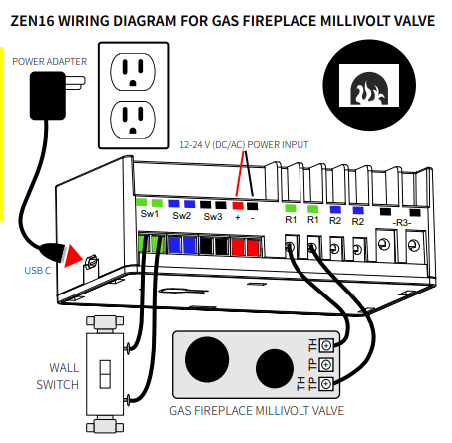
I put in a Zooz Zen16 Relay. Allows me to use the current dumb switch AND also smart control, such as rules to turn the fireplace off after x amount of time and/or at a particular time. Those rules run multiple times at a few minute intervals after the turn off time to ensure it's really off.

In this situation, the failsafe IS the thermopile. If the temperature drops (aka, the flame goes out), the thermopile loses voltage as the temperature of the hot junction and cold junction get closer to each other, and the gas valve shuts off.

If anything, smartifying adds a layer of protection in that it could turn off the switch that completes the circuit if temperatures get too high in the surrounding area. As it is now, with just a dumb switch, it could be accidentally left in the on position and left unattended with no controls.

1 Like

For one failsafe case. That being lost flame. What about Hubitat locking up and all the rules to shut off the fireplace never run? Would the home be safe if the fireplace ran for 30 days continuously? Would the resulting gas bill be gladly received by the homeowner?

Thermopiles and thermocouples provide important and essential protection, no doubt. But once you automate a gas appliance you bring other factors into the frame. This is why failsafe is typically layers of protection, not one eureka solution.

How is that different than a dumb switch without ANY controls that gets left on?

The OP diagram shows NO failsafes other than the thermopile. Smartifying adds convenience and some little bit of extra level of control.

And thermocouples do not add anything other than a temperature measurement. I never brought them into the discussion.

2 Likes

First things first, you need to fix your zigbee network so that you have a reliable mesh at the fireplace. I'd install the zigbee map app to get a better view of your mesh. Sounds like you need more repeater devices between the hub and the fireplace.

Once reliable, then here's a posible strategy:

It appears that the original system has an on/off switch which then is controlled by the manual thermostat when on. So replace the on/off switch with a zigbee relay and control that by a rule which pulls ambient temperature from any number of available zigbee temperature sensors (I prefer THIRDREALITY Zigbee Temperature and Humidity Sensors and use them everywhere myself). Use the original thermostat as a high temp limit switch. Do whatever you want in the rule. Heck, you could even place a zigbee button at the fireplace and add it as a trigger if you still want to retain local on/off control. To manually shutdown the system, crank the original thermostat all the way to the left. Or, you could wire the zigbee relay in series with the manual on/off switch to retain full manual control of the shutdown: With the switch off, nothing can start the fireplace. Most of the devices I mention above have a battery life measured in years or you could put together an AC based power supply with an appropriate wall wart.

People today are so afraid of their shadow it's getting ridiculous, he is adding a dry relay in parallel to a ON/OFF switch that is already on the fireplace provided by the manufacturer and has been approved by some authority to be safe for continuous ON operation or else it would not have been there in the first place. If the hub dies or whatever, it's not worst than the provided switch turned on and forgetting it's on for 30 days when he left for a vacation.

If the OP does not code his rule or whatever correctly, it won't burn down the house, ya sure he might burn fuel and get a bigger gas bill but I don't think he will get on here and start ranting that his gas bill was high and blame Hubitat or any other user here about it (at least I hope not :stuck_out_tongue_winking_eye:)

1 Like

I sincerely appreciate all of the feedback and I probably should have provided some additional detail on my setup, the wiring digram was showing how my gas fireplace was originally setup, with a dumb switch that simply closes a circuit, and yes...leaving that for days would likely cause the fireplace to run continuously.

My desire is to replace the switch with a thermostat, which is why I purchased a Zen and Centralite (chose those as I only had wiring for Rh and W and no C wire...initially). I want the esthetic and manual control of a thermostat but the ability to control the thermostat with my Hub. The thermostat itself will add additional failsafe that I do not currently have with my dumb switch.

To be clear...both thermostats worked well, they controlled the temp, cycled when necessary and when they were powered with a 24V adapter (which I wired between C and Rh) the display stayed on. As a "manual" thermostat, they both worked fine, my issue is with keeping them on the network so I can control them. As I mentioned, I setup 2 zigbee networks, changed the channel, tried HA to see if the drivers were the issue in the C7 and nothing has worked.

My intention was never to control the fireplace directly with the hub.

All of that said...I am intrigued by the poster that has the dumb switch and Zooz Relay...how did you wire that? in parallel with the switch or in series? I assume series, but that might give me some Rules based control that if I forget to turn down the thermostat at night a rule can cut the circuit, perhaps a temporary solution while I figure out how to make my zigbee mesh stronger (which I am still not clear what I need to do for that to happen).

I think I see how the Zooz is connected:

image

I assume this can also work as a virtual thermostat by adding a temp sensor? In that scenario the dumb switch would remain on and be controlled by the Zooz and a temp sensor, then switching the dumb switch off would presumably open the circuit and shut it off? Apologies for the lack of knowledge of how relays work...

I do have the Zigbee map app, which works great, and it shows me that my fireplace turns magenta coloured after a few hours (I did not find an equivalent on HA, but the built-in visualiser showed me the same).

So...to fix my zigbee network I need more repaters? How many is enough? I currently have 4 and one is 1 metre from the fireplace and was 5 metres from the Hub.

Well quite a bit actually.

How do you flip a switch on the side of the fireplace when you are 1300 miles from home.... you can't. With HA, you can.

Now consider when you turn the switch on in person you confirm the flame lights and go on with life. Conversely when you are 1300 miles away and turn it on, perhaps inadventently by fat fingering a dashboard, and the fireplace lights. No problem right? It has its own failsafe mechanisms. What is the failsafe mechanism for the sofa pillow tossed in the fireplace when the boys were horsing around? Or the throw blanket that was sloppily tossed on the hearth? Did the thermopile pick that up?

Sure these possibilities are remote but they are non zero probabilities. This is why layers of failsafe are best.

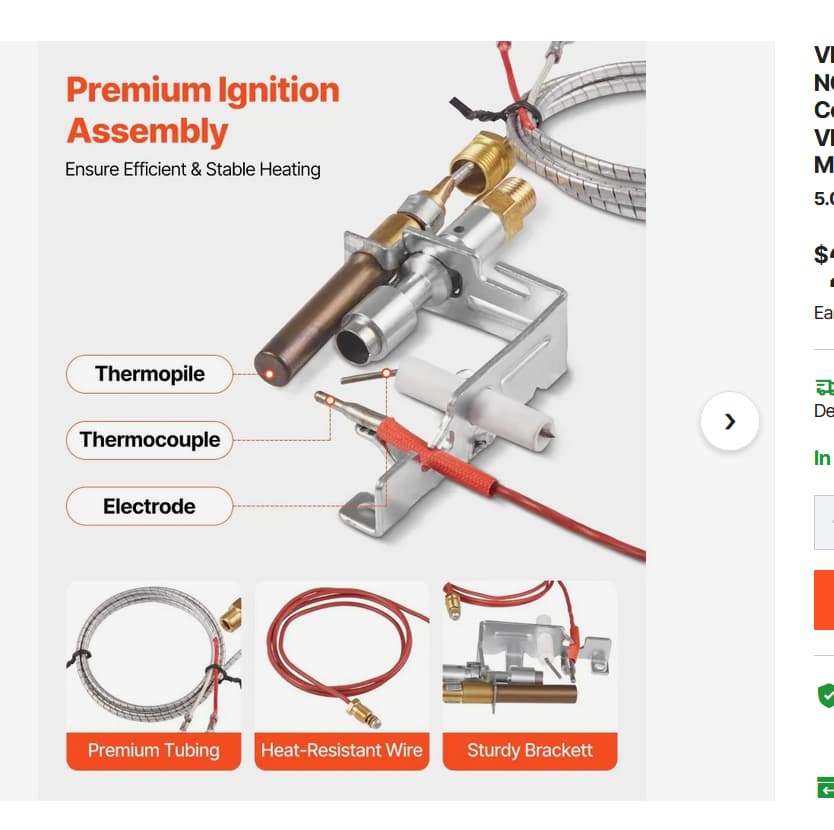
As for thermocouple, as you must know, is the device that keeps the pilot light going. The thermocouple powers the pilot light "hold on" solenoid. The thermopile generates the voltage/current to control the main gas valve (other on/off solenoid). They typically both exist on a firelog set.

I use a physical switch in series with a smart switch. The physical switch has a FingerBot on it that only disables the switch. The FingerBot cannot turn on the switch (not possible). The FingerBot turns off the physical switch at any mode change (Sleep, Home, Away, etc.). The first time that I want to use the fireplace, I must first physically turn on the switch. Then the smart switch controls the fireplace via a virtual thermostat. The FingerBot then turns off the physical switch to protect against hub issues, etc.

How is this different than if he installed a dry relay thermostat as instructed in the diagram he posted. Does the thermostat know if a pillow is in the fireplace and not to start it up when you are 1300 miles away. It's all the same thing whether it's a dumb switch, a dumb thermostat, a smart thermostat or a dry relay controlled by Hubitat. It was certified that way and will still be certified with any of them, personally I would have a thermostat in series with a dry relay controlled by hubitat just in case so that if the room get's to warm, the thermostat turns it off OR I would just install a smart connected thermostat and control it via Hubitat like most of us do already.

The difference when you are present, is that you are the fail safe, if you are controlling remotely there is no fail safe.

You do you. I'm just trying to encourage people to not focus in too narrow on control systems for gas appliances. There is a difference in turning on a hallway light and firing up a fireplace. In the end the user can do whatever they want but some measures of containment doesn't cost anything.

For instance writing a separate rule that shuts off the burner after x hours independent of the main control rule. A catch all rule for some unimagined rogue condition. Cost a couple lines in RM, $0. Use a Zooz dry contact relay and program it so it auto shuts off after x hours. Secondary safety net in case Hubitat gets scrambled or ZWave locks up. Cost $0. Send a notification if either of those conditions every trip. Be sure to use NO contacts of relay for controlling gas valve such that if power fail occurs natural state is off. Costs nothing, and you would probably do it this way anyway. Add a high limit temp switch somewhere around the firebox with a trip threshold well above what would be the normal temp rise for that spot. Then connect in series with gas valve. Cost a bit of effort and a few $$....

And what if that fails. I've seen a dryer fire where the high limit switch failed.

Remove the Hub from the equation and use a dumb thermostat as instructed by the manufacturer, the thermostat will keep turning things on/off while you are away. Ya sure it will stop at a certain temperature as set (if it does not fail) but that's it no difference.

So you can't say that adding the hub to the equation will inherently be less safe, just need to use your head like having a dumb thermostat in series with a dry relay or a smart thermostat controlled by the hub like I said above.

Do most people keep their gas fireplace on and controllable by a (dumb) thermostat while away?

2 Likes

That all depends on the fireplace you you have, many gas fireplaces (vented) are built to be on all the time even when away, my mother in law and a friend both have gas fireplaces that are the main/only source of heat in the house thus need to be on all the time. Of course if the fireplace you have is not made for this, don't leave it on when away, but here in Canada vented fireplaces are now the norm and most can stay on all the time, I of course assume that most countrys have banned non vented units like Canada did but I might be mistaking.

3 Likes

Not to derail @Locutus's thread but I would like to do something similar with our bathroom heaters. Since you said you tried the Pearl thermostat, did it work other than not staying connected?

In our bathrooms there are heat/vent units in the ceiling. They are simply turned on and off by a manual switch, I replaced the manual switches with smart switches and I currently have them automated using virtual thermostats. I have temp, humidity, motion sensors that along with virtual thermostat control the heating of the bathrooms.

I would like to have a physical thermostat so I can control temperature without having to rely on opening my HE dashboard. So could I just attach the Pearl to the wall and use the thermostat like a virtual thermostat. There would be no actual connections to the thermostat I would just monitor state changes with Zigbee and RM rules would turn on the switch as needed.

Yes, other than staying on the network the Pearl has been working as designed, can take a setpoint, monitors the temp and cycles as needed. That said...I was only able to find it on eBay, was new, but it seems the manufacturer has abandoned it. I pesonally preferred the esthetic of the Zen thremostat (also hard to find). Both ran well on batteries and both consistently dropped off my zigbee network. With no C wire I hooked them up to Rh and W.

When they run on batteries the display will go into sleep mode after 10 seconds or so to preserve power.

Asked AI and it said that that would be an issue. On battery power it said it would not last very long and would be slow to respond to commands. I have no real way to get power to a thermostat in the bathrooms with out some inventive wiring. So may have to stick to the dashboard.