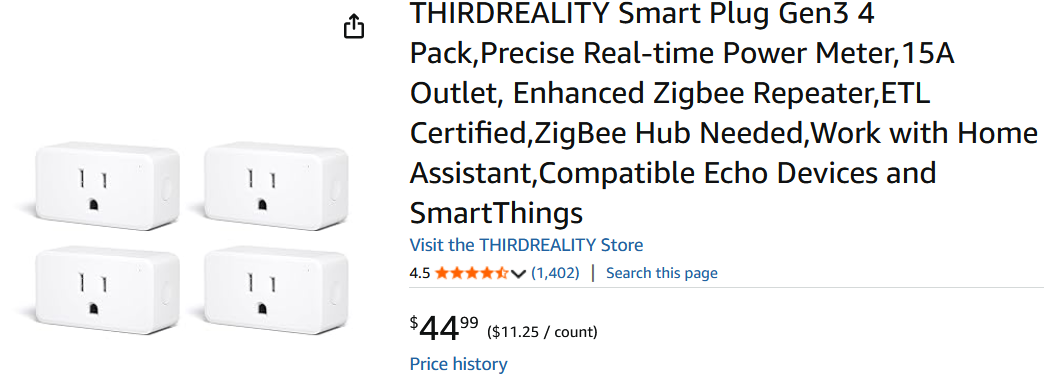
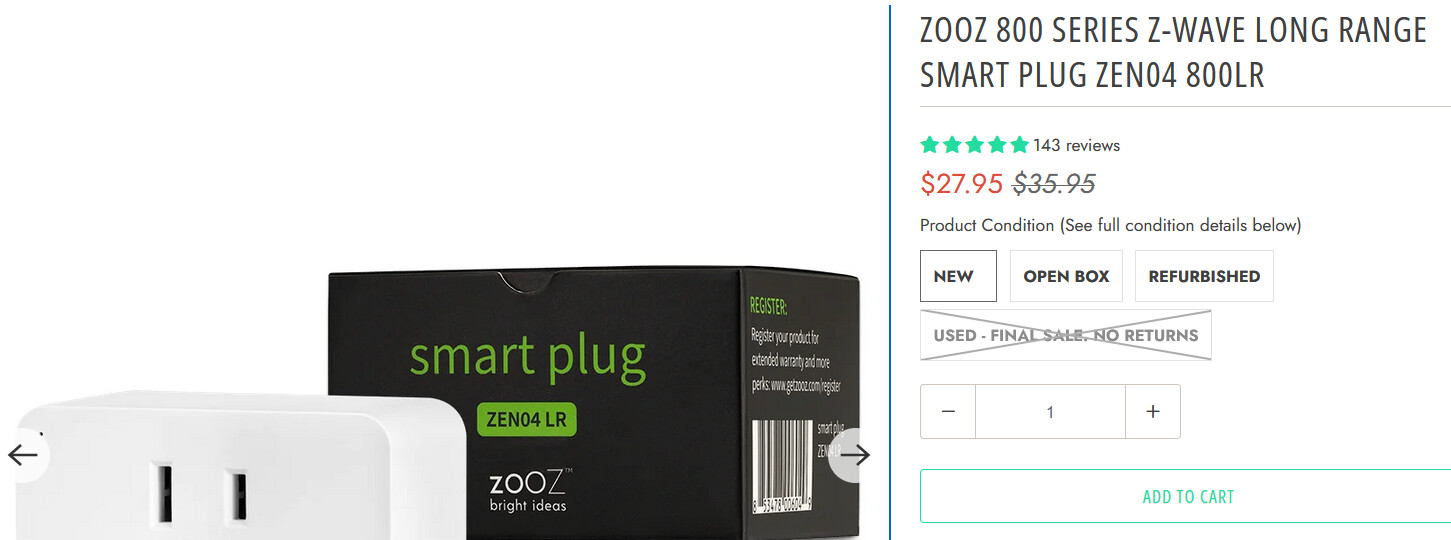
A +148% premium for ZWave over Zigbee. I've been loyal to ZWave for over a decade but recent performance issues on a large network is shaking my loyalty. With such pricing disparity is ZWave going to fade into the sunset?
Note to Silicon Labs: if you are reading this you have to adjust your chipset pricing if you want to remain relevant.
This is awesome example of you get what you pay for. those third reality power metering plugs don’t respond to standard zigbee clusters for power metering. If you have enough of them reporting power changes with the default driver it can cause the zigbee radio on the hub to reboot. Extra bonus, if you try to change the power metering frequency, unless you use a custom driver it wont actually change.
The time i spent tracking that down, i would have saved money by using zwave devices.
Was that with the current 3rd Reality Gen 3 device? I only have one of these devices and haven't had problems. Granted a sample of 1 is not very meaningful. There seem to be a lot of happy Zigbee users (with large networks) on this forum. Generalizing one bad experience to all others seems dramatic.
Not new perhaps but is the $$$ disparity growing? If the ZWave "Tax" is $12-17/device and you have a 50-60 device network that is an $800 premium for ZWave. At what point is the premium not worth it?
Zwave standards are firmly enforced with device certifications. Zigbee standards are like a strong suggestion. That coupled with the fact that when I started pretty much all switches were Zwave, I am mostly Zwave in my house. Maybe a little biased since I work closely with Zooz, but it did not start out that way.
Each technology has it's use, using Z-Wave switches in metal box (the standard here in Canada) is way better than using Zigbee, if you add a few concrete/block walls in the mix, it's pretty much the only available protocol/frequency out there (ya I know Lutron but that is even higher priced). But battery powered devices are better suited for Zigbee although the 800 series does have some good power saving features making it almost as good for battery life if the firmware is programmed correctly.
So in most houses, a mix of both is needed for a reliable setup.
There are also a lot of zwave users on this forum with large networks that are generally happy with their zwave networks. Dont you think generalizing the price difference between zwave and zigbee as the demise of a zwave to be overdramatic? In a world full of Corolla’s, the Camry still exists… at a price premium.
I’ve purchased both bad zwave and zigbee devices but with zwave i know the device is following much stricter standards and that has value to me and i am normally happy to pay the zwave premium, and i’m not the only one.
Now If there is going to be a demise of zwave… Texas Instruments recently bought out silicone labs and not all products survive acquisitions. zwave 900 should be out in the next couple of years, so we’ll see.
Maybe. It seems more like Zigbee is getting cheaper and Zwave prices are staying about the same. All my in-wall dimmers and fan controllers are Zwave, but most of my devices are Zigbee otherwise. Currently I have about 45 Zwave and 110 Zigbee devices.
The price of Tuya Zigbee stuff on Ali Express has been adding to my Zigbee numbers recently.
Another aspect of this is that allot of those zigbee certification gaps are what vendors use to attempt vendor lock in. The folks here have done a great job figuring out those gaps and coding around them, but it shouldn't be needed if everyone would just play nice together. That isn't a issue with Zwave. A certified zwave device should work with any zwave hub.
No. I count myself in the price inelastic camp so I feel I don't represent the larger population. I've bought well over 200+ ZWave devices in the past decade and retired 50 or more along the way. So by my math I have paid a >$2,000 ZWave Tax the past decade. So my actions mirror my long standing preference for ZWave (mainly based on 900 MHz propagation advantages and separation from 2.4GHz band).
I'll confess I'm a little jaded with ZWave recently because I swapped one residence to C8-Pro from a Vera Plus (almost 10 years old) and I upgraded a bunch of old Leviton dimmers to Zooz 800 types. Now my ZWave network works poorly compared to before. Yes we can deconstruct the ZWave table, PERs, RSSI, routes and all the minutia but it doesn't escape the fact my network with the identical device locations worked better with my "Vintage" Vera and no 800 devices. Not many have done such an A/B comparison. So I continue to work through that situation but it has made me question the ZWave Tax/premium when I never did before...
At the margins, there are a lot of users that a $12-17 per device is tough to take. I suspect far more elastic consumers than inelastic. That's the nature of a mass market. In the end the marketplace will decide who wins.
What bothers me is that the online documentation for compatible devices is always way behind. How long has the Thirdreality Gen 2 Smart Plugs been on the market? But yet there is no mention of it in the online doc. They have the Gen 1's listed. And I would say that device list is a "First Impression" of what Hubitat supports:
There will always be a place for z-wave since it opens the doors for people in areas where zigbee may not be a great option. Such as apartment buildings and such where the 2.4 band is extremely over saturated.
What is going to happen though just like mentioned with Corolla (and being in the auto part manufacturing industry I see this first hand) there are going to be many people leave the z-wave world for whatever reason (device cost will be a huge impact). Then the cost of manufacturing z-wave devices will increase due to volume loss meaning the final cost of the product will eventually grow exponentially causing that price gap to become even larger as zigbee continues to get cheaper. Z-wave won't die but it will eventually become a protocol that is only used by people out of necessity or protocol loyalist and the list of suppliers will shrink even more. It may not be tomorrow but it will happen.
As for the Third Reality Energy Monitoring Plugs I used to have four of those in my mesh that was reporting all at the same time. I had zero issues with them. I removed three of them because my needs changed not because they were causing issues with the zigbee radio. This device is a perfect example of how different environments cause the same devices to perform differently and may or may not cause problems. I have only had issues out of one device causing issues like that and believe it or not it was a battery powered Third Reality vibration sensor. When reporting active it would all but shut down about three quarters of my devices.
What's worse is the product line gaps in both camps. Certain devices such as thermostats and locks seem to be closing or have closed the door on Zigbee. Same can be said for sensors for Zwave. The whole industry can kiss my you know what.
The first gen was actually listed twice; I think one was maybe supposed to be the newer model. This has been fixed, so thanks for mentioning it!
Back on the original topic: I don't think cost is the only factor at play here (Lutron and others I probably don't even know about would certainly be out of business if it were), but it may affect some users' preferences. Both protocols seem to have found a niche (e.g., I don't think I've seen a security product with Zigbee), but we're lucky here since the hub supports both -- and more.
I find the discussion here interesting. Yes, there is a "premium" for Zwave, but it's not cosmetic. That premium comes with real-world benefits as many have pointed out above. There is definitely a price point after which there are diminishing returns for the increased price, but the Zooz and other similarly priced brands are not at that price point in my opinion.