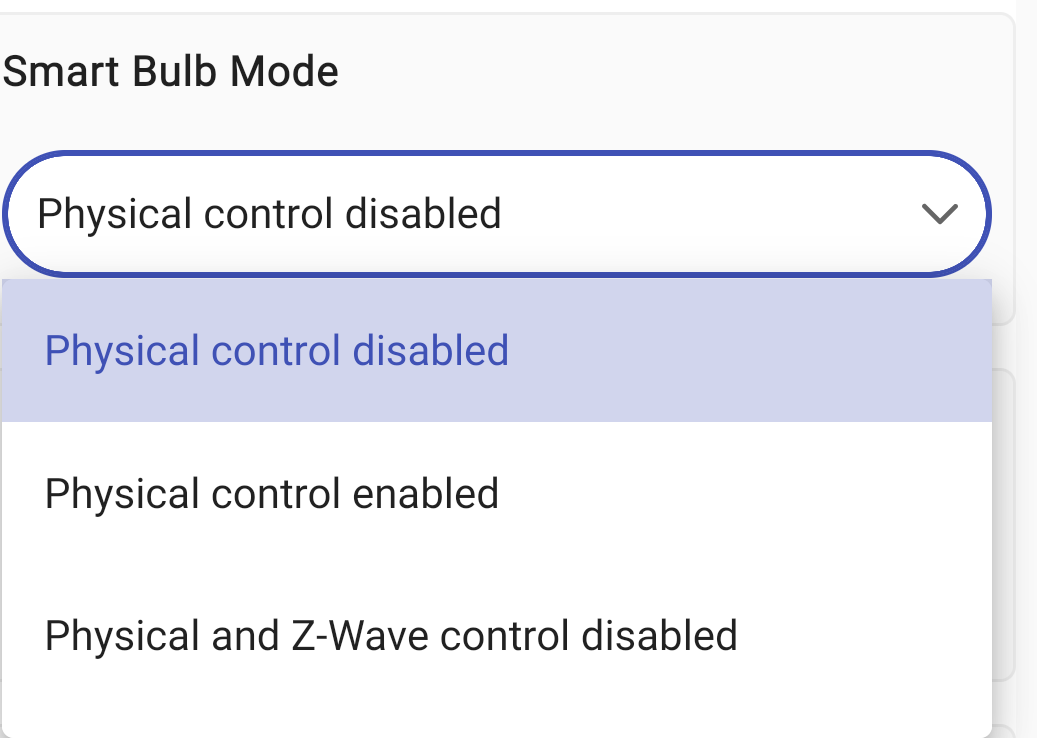
I have an environment where I have smart switches configured in smart bulb mode that I operate both locally (physically at the switch) and remotely (via RM rules). I periodically have issues where the bulbs appear to lose connectivity. I am wondering if by operating the switches in the rules, I am bypassing the smart bulb setting and cutting the power to the bulbs and causing my issues. I can fix my problem by operating the bulbs in the rules, but I would like to know that is the problem.
Once a switch is put in smart bulb mode (SBM), it will no longer physically cut power to the smart lighting load anymore, which is really the whole point of SBM.
With SMB, unless you use either zigbee direct binding (or z-wave direct association) to bind the switch and load, then ALL light & switch actions have to be set up as hub-based automations/rules. So even physically turning the switch on/off/dim needs to be an automation you set up.
But in all of these scenarios, once SMB is established, then the power going to the smart load is never actually cut.
Your issues with the bulbs sound like a connectivity (perhaps range) issue with that protocol -- what is the model of switch and the bulbs involved here?
Edit to add.... Or are you saying that you have some rules that programmatically disable/reenable the switch's SBM? While that would be unusual, I suppose it's not out of the realm of possibility...
"Physical control disabled" only disables the physical switch. A Z-wave off command will cut power to the bulbs. I keep them in this mode so I can reset the bulbs when there are connectivity issues. But that means that all my rules have to control the attached bulbs, not the switch itself.
Edit: to clarify, when physical control is disabled, the switches still send 'button pressed' events, so the physical switch can still trigger rules via the button press/double tap/hold events.
Right on... As my edit alludes, I then realized that it's possible (at least with some switches) to still programmatically manage SMB. Your use case for doing so makes good sense.
My reading of OP's post kinda makes it sound like they could be doing that as some kind of routine thing to manage lighting (which would be an odd use case of that capability).
Thanks for your help. I suspected this and I appreciate your clarification and confirmation.
As to the why of smart switch AND smart bulbs....
My ceiling fixtures have multiple bulb outlets. In the switched circuit, one bulb is bound to and controlled from the switch (configured as you indicate.) The other bulb is triggered by motion and not bound to the switch. I have another "whole house app' that turns on all lights when the security system is disarmed. Controlling the switches from that app was the source of my problems. I now know that I have to control the bulbs, not the switches. Thanks again