Hi everyone,
I’ve been working on a integration for Snooz white noise machines with Hubitat.
The goal was to get reliable on/off + volume control inside Hubitat. The approach is a small BLE-backed WebSocket service(runs on a Linux device like a Raspberry Pi, or even a Mac) plus Hubitat parent/child drivers that maintain a persistent WS connection and create a child device per Snooz unit.
 KEY FEATURES:
 Local-only control over Bluetooth (no cloud)
- Persistent WebSocket & Bluetooth connection from Hubitat → BLE service (LAN)
- Multi-device support (one BLE host, multiple Snooz devices)
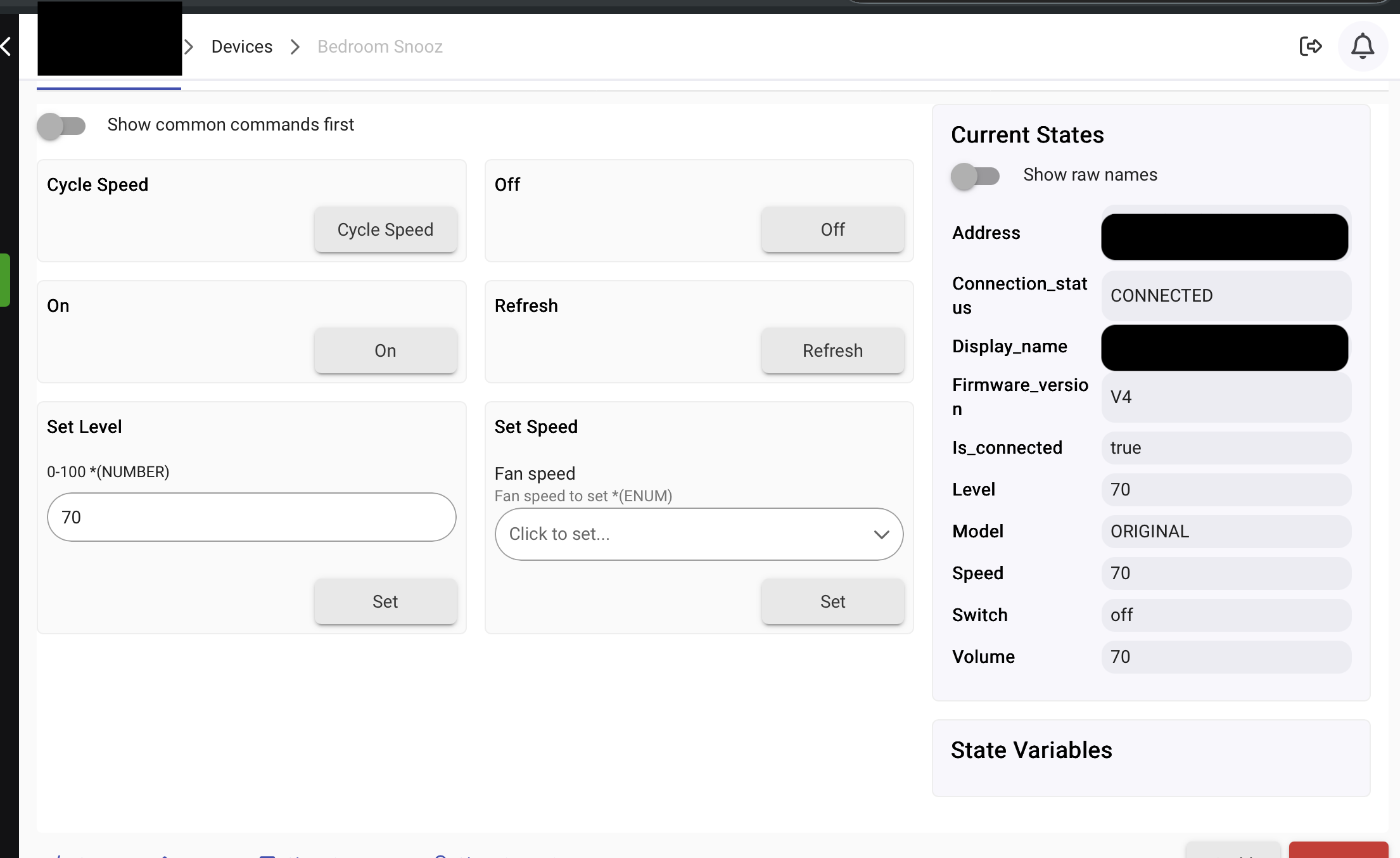
- Child device per Snooz machine with:
- Switch (on/off)
- Volume (0–100)
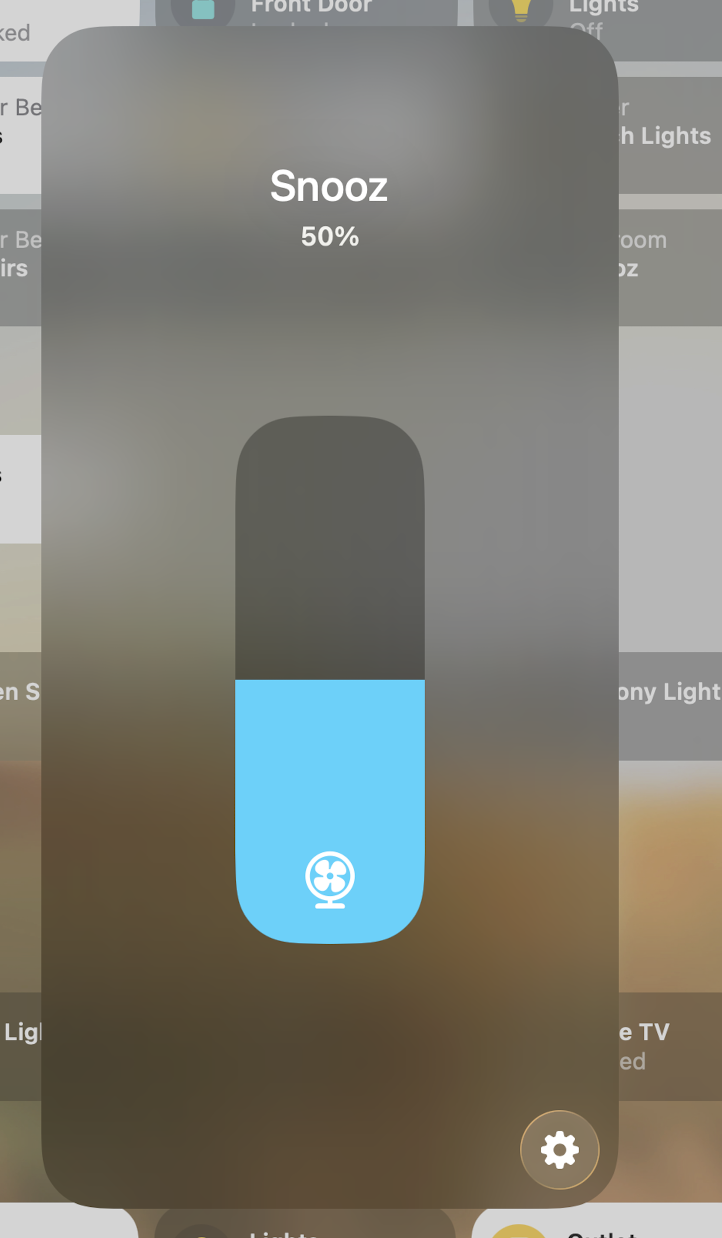
- Exposed as a Fan device (speed maps to volume) for Homebridge friendliness
- Connection metadata (connected / model / firmware / etc.)
- Optional Bearer token auth on the WebSocket service
- Docker / docker-compose ready service for easy deployment
- macOS support (on Mac you typically match by device name instead of address)
 How it works (high level):
- A BLE host (Pi / Linux box / etc.) runs the Python WS service
- The service talks to Snooz devices over Bluetooth using pysnooz
- Hubitat connects over WebSocket and auto-creates child devices
- Commands flow Hubitat → WS → BLE and state updates flow back WS → Hubitat
 GitHub Repo & Setup Guide:
https://github.com/K-MTG/Hubitat-Snooz-BLE
 My hardware setup so far:
- Tested on Raspberry Pi (Ubuntu Server) & iMac
- BLE reliability improves a lot with a decent USB Bluetooth adapter if you’re in a noisy RF environment or farther away
 Notes / Tips:
- This is LAN-local only — don’t expose the WS port (8765) to the internet.
- If your LAN has untrusted devices, enable the auth token.
- On macOS, BLE “addresses” can show up as UUIDs — the service supports matching by device name (e.g.
Snooz-040F) which works better.
Feedback, issues, and suggestions are very welcome!