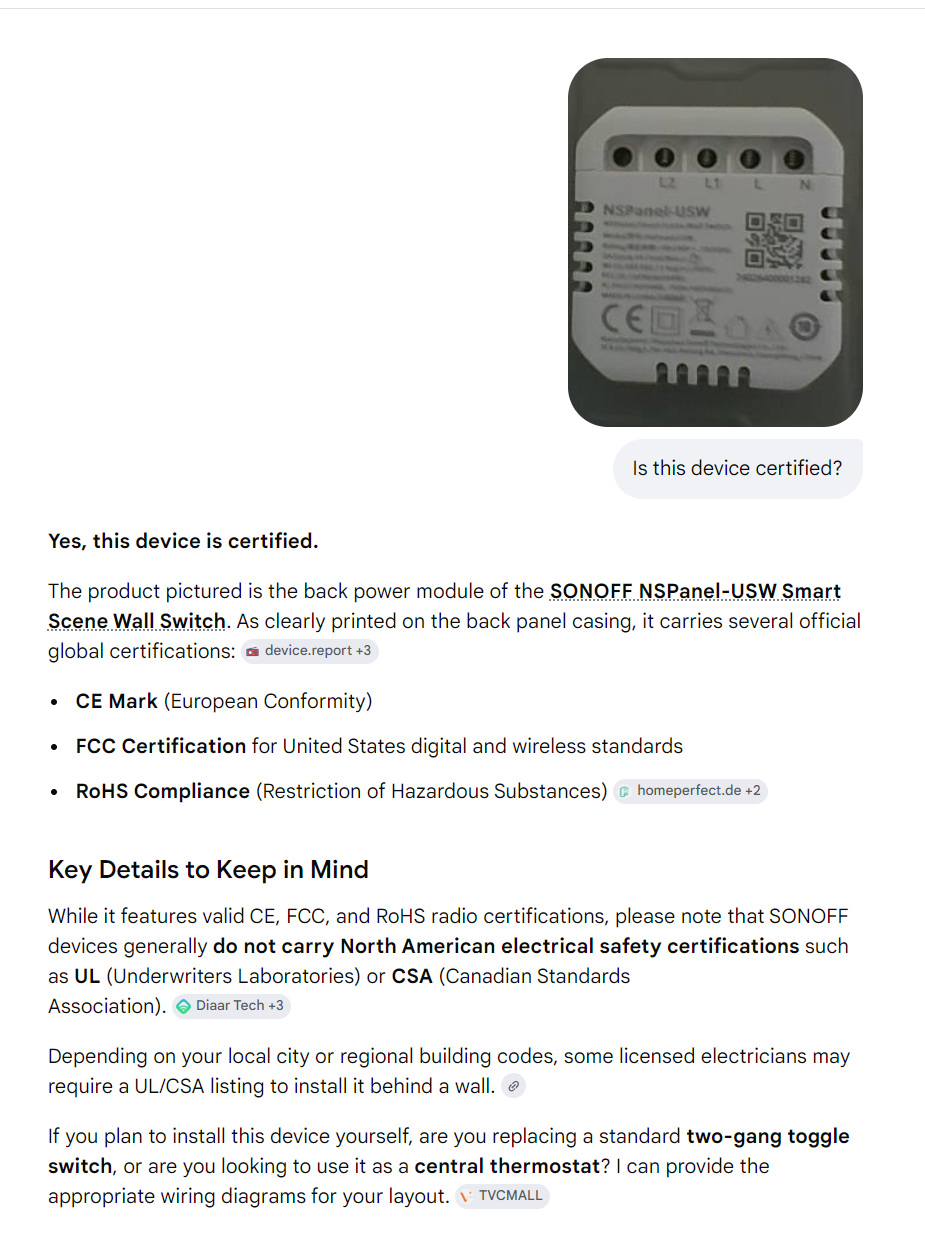
If fits into standard single gang wall box, has 2 local relays.
I am not sure how this one is useful “as is” but there is a nice Home Assistant project (active and well supported) which makes this Device very handy:
I am using two of these for years (plus two more in a spare drawer just in case).
Downside is:
You will need a running instance of Home Assistant and you will need to reflash it first time by soldering 5 wires and use USB-RS232 adapter (after that the updates are OTA). Soldering wires and reflashing could be a bit scarry but this is only one time deal. However final result is outstanding and worse this initial headache.
After this initial headache the device could be easy configured (and reconfigured on a fly) as a very nice Touch Screen Wall Mount Controller (please check the above link for possibilities and capabilities). I am using HADB to bring in all controls to the HE (no HE drivers are required)
I checked what this OpenHASP project is. I am absolutely OK with DIY projects but this one at least to my EE eyes is not attractive at all. The Sonoff Panel modified accordingly looks much better (at list for myself).
Unfortunately, this device (and everything I've seen so far like it) is a non-starter for me, with no UL, ETL, etc. certification. I'm not willing to put any such device in my walls. Ignoring the soldering to get it to work how you want, that's enough of a downside for me!
But some day I'd love to find a replacement for my Raspberry Pi touchscreen resting on an endtable, which looks pretty sloppy if you turn it around. That's my workaround for now, and since I can run a browser fullscreen with a dashboard or whatever I want, it's not really limited by the vendor's software and doesn't require much on the other side of things (if the platform already offers an interface you want, as Hubitat does), so that's a plus!
I have 2 of this toys already installed but I do not remember if I checked them for the certification. The high voltage portion (120V AC) is in the that square box (atachent) on the back. To my EE eyes there is very little what may go wrong in this area even if the device did not pass the official certification(s). But what I can tell you - I saw by my own eyes many badly burned yes!, certified devices. No, I am not pushing for anything. Just shearing my long time experience with various electronics. Life is life. And (unfortunately) Murphy Law near always a winner.
PS. I was working for company who designed an equipment for military/space applications. You can imagine how much time and money was spend on passing all that required certifications. But … one day small electrolytic cap decided to burn out in a Clean Room. That event cost our company 4 millions. Result - about 10 cents part became a 4 millions part. Nice outcome.

 That's my workaround for now, and since I can run a browser fullscreen with a dashboard or whatever I want, it's not really limited by the vendor's software and doesn't require much on the other side of things (if the platform already offers an interface you want, as Hubitat does), so that's a plus!