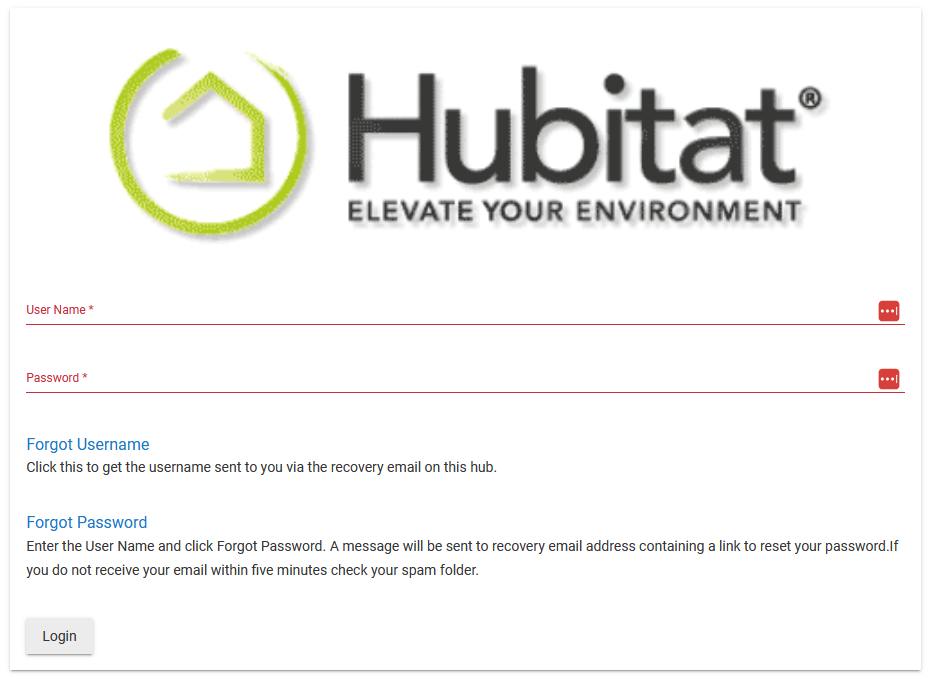
This endpoint requires a valid URL parameter. Does it change anything if you try one? You can find an example here:
Since you are one major release behind, I’d also see if anything in 2.5.2 changes anything (I don’t recall anything specific, but you can roll back with the Diagnostic Tool if you have a reason for this).
"Restricted non-local access to the hub. Allows non-local subnet whitelisting by using /hub/allowSubnets endpoint, e.g. /hub/allowSubnets?123.123.123.0,124.124.124.0. Running endpoint without parameters displays currently whitelisted subnets."
But retesting on the current platform version is always the best first step if you are investigating a problem (and not on it), so I'd still start there.
Looks like it's a browser issue. Firefox doesn't work; Edge does.
That begs the question: Why is this setting hidden behind some arcane entry in a five year old release note rather than in the Settings section of the GUI?
Because it's a security feature that intentionally prevents some misuse, like public exposure of the hub (i.e., directly to the Internet). Making it more prominent would do less to prevent the misuse it's there to thwart in the first place, but it's there if people truly have a need, and the few users who might should feel comfortable doing this. That does raise the question: what is your use case?