I have searched for a solution, but came up confused. My fireplace is controlled by a low voltage switch. I installed a low voltage, battery powered smart switch to control it. That switch runs through batteries quickly. Is there an 120v AC switch that can do the same? I want to be able to manually turn on the fireplace and will need a regular style switch. But I also want a smart switch option.
A Zooz Zen58 (or Zen16) should do the job
Power the Zen58 with a plug in AC to DC power supply.
2 Likes
Or a ZEN51 LR. Power the ZEN51 from the mains and use the dry contacts to control the gas valve. The dry contacts would go parallel to the manual switch.
It should be noted there is risk with controlling an unattended gas appliance. Proceed with caution.....
This solved that problem for me, with a reasonably high WAF.
The AAA batteries last months.
1 Like
My recommendation would be to never control gas fireplaces or garbage disposals with SmartHome devices. To me, the risk is way too high.
I would not wire in parallel, but rather in series with the existing switch. This provides a simple manual override should the automated dry contact get stuck in the ON position.
Again, I would advise against this idea completely.
3 Likes
My approach with the Third Reality bot switch is to use it only for automated OFF actions (e.g., turning the fireplace off two hours after it was turned on or midnight, whichever is earlier). You still have to push its button manually to turn the fireplace on, which is no different than flipping the existing switch. Accordingly, the bot actually increases safety.
3 Likes
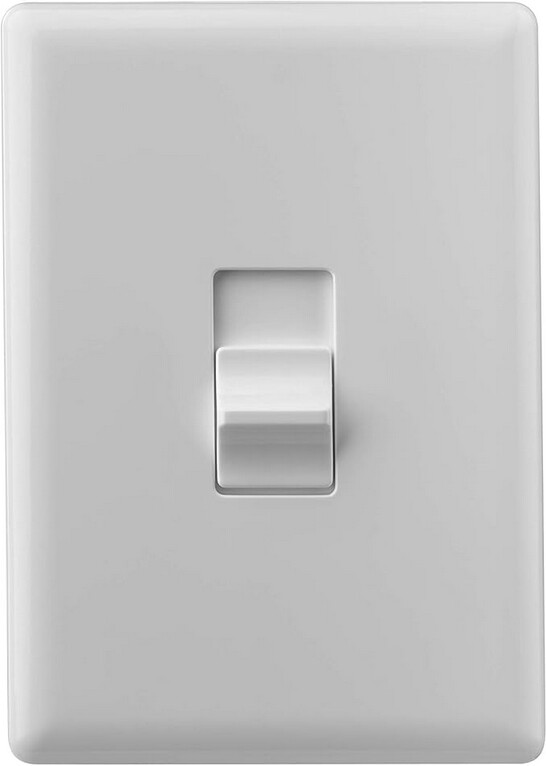
1 Like
Zooz has the Zen16 and Zen17 that can perform this task.
I have a Zen17 and use it with my system.
Simply put the wires that go to the switch connected to the Zen17 and then the old switch is connected to the switch input on the Zen17. It is easily removable in my case as the wires to the switch already had crimped connectors between it and the control module. I just put short jumper wires between the Zen17 and the original wires that were already there.
The nice thing about the Zen17 is that if needed you can control another device as well like a fan to improve heat output if your fireplace supports it.
To reiterate. This model is good. It's small, low voltage and you can wire the switch in.
The multi-branded Zigbee relay boards work well. You can get them in singles, doubles, and quadruples. They do not run off of 120v, but they will run off a 5v USB using the USB power port and a standard 120V USB power brick, or direct from any 12-24v AC/DC power source.
With NO and NC, you can have it flip control from the manual switch to smart control. Put the wire that energizes the fireplace on COM, then put the wire after the manual switch on NC, and put the wire from before the manual switch on NO. When it is off by automation, the manual switch will still have control.

I agree with others that this is dangerous, however.
1 Like
What's the concern of a gas fireplace being controlled by automation? Turning it on with no one present? Overheating?
Is it more dangerous than any other gas heating device due to some missing component or function?
Forgive my ignorance on the subject.
 Concerns with Automating a Gas Fireplace
-
Unattended Operation
- Primary Risk: The fireplace turning on when no one is home.
- Why It Matters: If something goes wrong (e.g., a gas leak, obstruction, or malfunction), there's no one present to intervene.
- Mitigation: Smart systems should include safeguards like occupancy sensors, geofencing (only allowing activation when someone is nearby), or manual confirmation.
-
Overheating or Prolonged Use
- Risk: If the fireplace runs too long, it could overheat the room or surrounding materials.
- Mitigation: Timers, temperature sensors, and automatic shutoff features can help prevent this.
-
Gas Leak or Ignition Failure
- Risk: If the ignition fails but gas continues to flow, it could lead to a dangerous buildup.
- Mitigation: Modern fireplaces often have flame sensors or thermocouples that shut off the gas if no flame is detected.
 Is It More Dangerous Than Other Gas Heating Devices?
Not necessarily — but here’s what makes gas fireplaces potentially more risky if automated improperly:
- Lack of built-in thermostatic control: Unlike furnaces, many fireplaces don’t regulate temperature automatically.
- Open flame exposure: Fireplaces often have visible flames, which can pose a greater fire hazard if something flammable is nearby.
- Manual safety checks: Some older models rely on manual operation and may not have modern safety interlocks.
 Best Practices for Safe Automation
If you're considering automating a gas fireplace, here are some safety tips:
- Use certified smart controllers designed specifically for gas fireplaces.
- Ensure the system includes flame detection, gas shutoff, and temperature monitoring.
- Avoid remote activation unless you have visual confirmation (e.g., via a camera).
- Consider integrating with home automation platforms that support safety rules (like “only turn on when someone is home”).
1 Like
I have added webcore monitor/safety checks because of this conversation.
If I did use something like the Zooz Zen58, do I still face the code issue of line voltage and low voltage in the same box?
The zen58 is low voltage. Do you have low voltage power from a transformer at the switch location?
I've been using this for a couple of years. Works perfectly and I get at least a year of battery life. The fireplace repair guy we had out to replace a thermopile asked for info about it and thought it was a slick solution for many of his customers. Even if folks don't have full blown HA systems they often at least have an Echo that supports Zigbee. No need for AC at all which was what I needed.
I misspoke. I meant the Zooz Zen51, not the Zen58. This is my cubby. My thought was that I run a wire from the plug around to the fireplace switch and use the Zen51. Thus my question about line/low voltage in the same box. The plug in the outlet now is only for Christmas decorations that are going in this week. My wife does not want a wall wart (5V option) there. I do not have low voltage in this location at this time.
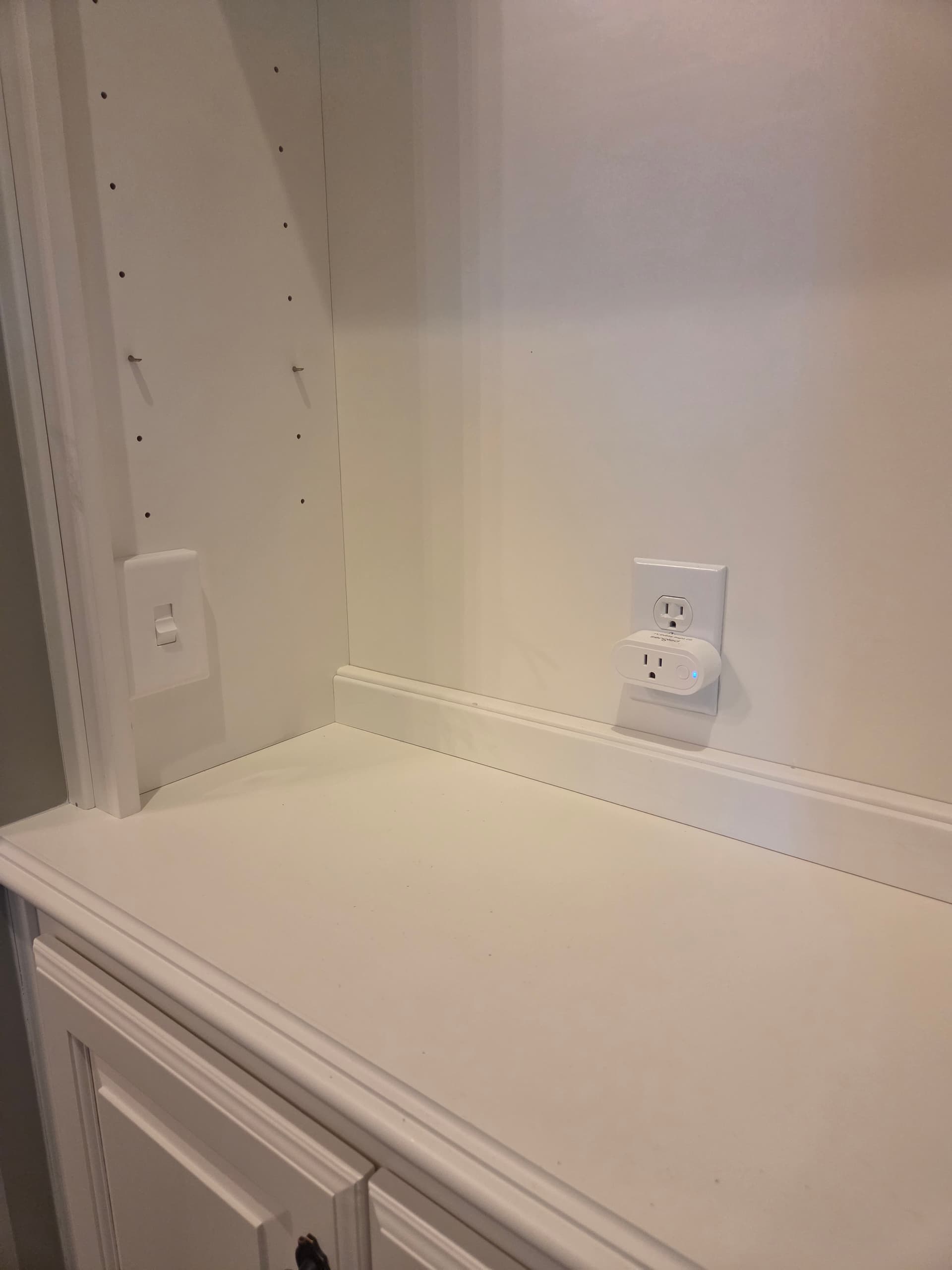
That makes things a bit more complicated, but how about a 9V battery to power the Zen58, in the box with the fireplace switch. I haven't done this, and don't know the lifetime of a battery in such an approach, but the Zen58 is fairly flexible on input power, and then you keep everything low voltage in the existing fireplace 1gang box, so I dont see any code issues with such an approach. (Battery in existing Fireplace box, & the Zen58 is pretty small)
You could replace the existing outlet with one that has a built in USB (5v) power supply, to avoid the wall wart, but then you still have a USB cable running between the two. (low WAF)
Just some thoughts.
Good thought. But I would have to remove the faceplate to change the battery. Not ideal. And as you have noted, how long would the 9V last...