The above will require per pixel control, which isn't what most strips do. - and 75' is like 23m, so your talking 5 strips for each "bar" - If you can live with different sections (and colors/brightness) falling on the strip boundaries that makes thing easier. - If you really want to independantly control each foot across all the strips, that makes narrows your field of options.
I'm assuming you can get behind where ever this are mounted, as your going to have to power inject, and send control signals to each strip that makes up a bar - so 4 or 5 points for connection to each strip.. You just can't solder together a single 75' strip, and have the power and single propogate those lengths. If you run high voltages (24V) over heavier gauge wires, that's helps with the losses, but a typical multiple color strip is 5-20W/meter - depending on the brightness and density you want - see:
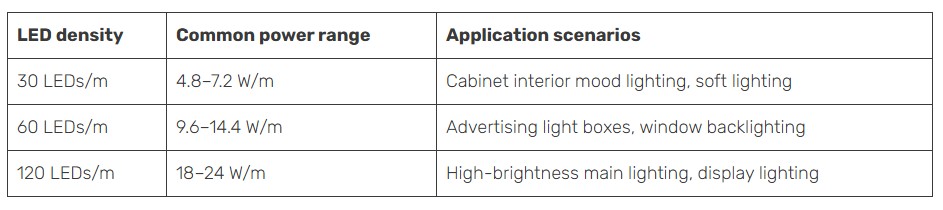
So you can do the math on ft->m, and come up with a power budget (and corresponding PS need). - I liked 24V for room/shelf lightening, and then I used 18 AWG feed wires, but I had about 20 feet from the controller to the strip. - There are more choice in the 5-12V options, but 150' of strips, is likely a few thousand pixels, and likely around 500-700W of power.
I used the following to come up with options: Multi Color Changing LED Strip Lights and my builder recommended LED Tape Light & LED Strip Light: Indoor, Outdoor, & RGB | Diode LED (I didn't actually use them)
And Amazon is always a source for strips. I ended up buy a bunch of different densities and color to sort out what strip type I wanted before buying the full lengths.
Finally, I used a PixelBlaze controller, given it's fairly strong integration with HE, but that's more of a higher end thing, and if you just want color control of a full strip, there are easier ways to do that.
Another education site is: How Much Electricity Does An LED Strip Light Use? A Complete Guide - Custom LED Strip Manufacturer From China